
Keynote Speakers
The symposium features keynote speakers from Southern Africa and Europe who bring expertise from agronomy, agroecology, crop diversity, climate resilience, and food systems research.
The list below will be updated as speakers are confirmed.
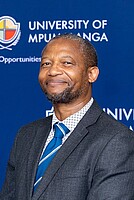
Prof. Ndiko Ludidi is the Dean of the Faculty of Agriculture and Natural Sciences (FANS) at the University of Mpumalanga (UMP) and an Extraordinary Professor in the Department of Biotechnology at the University of the Western Cape. He served as a Professor of Biotechnology at the University of the Western Cape in South Africa before joining UMP. He is a member of the Academy of Science of South Africa (ASSAf) and has extensive university-level teaching experience in biochemistry, biotechnology and plant physiology.
Among his various academic leadership roles are internationalization efforts focused on research, innovation and engagement to develop climate-smart regenerative agricultural systems to produce climate change resilient crops and develop crop production systems that promote environmental sustainability in agriculture and ensure food security. He is a Senior Editorial Board Member of Scientific Reports, an Associate Editor of BMC Plant Biology, a Review Editor of Frontiers in Plant Science. He is a member of the Management Committee of the DSTI-NRF Centre of Excellence in Food Security, the Advisory Committee (GMO Act) of the Directorate Genetic Resources of the Department of Agriculture, the Management Committee of the Africa-Europe Cluster of Research Excellence in Sustainable Food Systems (CoRE-SFS), a member of the Management Committee of UKUDLA and the Steering Committee of the International Consortium for Research and Applications of Legumes.
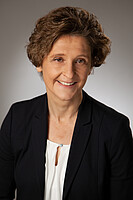
Prof. Dr. Simone Graeff-Hönninger holds the Chair of Agronomy, Institute of Crop Science at the University of Hohenheim since October 2022. Interdisciplinary and the targeted creation of synergies and innovations in the areas of innovative cropping systems, and digitalization in agriculture, plant based proteins as well as the sustainable bioeconomy are among her core research areas. Her research is always methodically complemented and accompanied by processed-oriented crop models (2D, 3D). Simone Graeff-Hönninger received her Ph.D. in 2000 from University of Gießen in Agriculture in the discipline of Plant Nutrition, and her Diploma degree in Agricultural Biology from University of Hohenheim in 1998. She finished her habilitation on the topic of “Precision Agriculture and Crop Simulation Modeling – combining two approaches to design a new, evolutionary, holistic farming concept for the 21st Century” in May 2006 at the Faculty of Agriculture, University of Hohenheim and received the Venia legend of Agronomy and Modelling. She is currently leading multiple research projects on chickpea and hemp covering different research areas for potential end-applications like food (TASTINO, EAT-Protein, Minor+, MYBELKID, CICERO), fiber (Bio-Fiber, Multihemp, Think) and pharmaceutica. Since 2019, she is leading the BMWK funded international network “Cannabis-Net
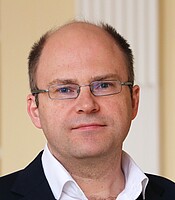
Prof. Dr. Sebastian Heß holds the Chair of Agricultural Markets at the University of Hohenheim and has served as Vice-Rector for Academic Affairs since April 2024. He is also Head of the Research Center for Cooperatives in Hohenheim. His research focuses on agricultural markets and price formation, product differentiation and contractual relationships in value chains, the role of cooperatives, and international agricultural trade and price policy.
Sebastian Heß received his doctorate in Agricultural Sciences (Dr. sc. agr., summa cum laude) from the University of Göttingen in 2007 and completed his habilitation (Docent) in Economics at the Swedish University of Agricultural Sciences (SLU), Uppsala, in 2013. He has held academic positions at SLU, the University of Göttingen, Kiel University, and the University of Hohenheim. Alongside his academic work, he has provided policy advice to institutions including the World Bank, FAO, and the German Bundestag.

Professor Unathi Kolanisi is a Full Professor in the Department of Consumer Sciences at the University of Zululand, South Africa, and an Honorary Research Fellow in the Food Security Programme at the University of KwaZulu-Natal. She holds a PhD in Consumer Sciences from North-West University and has close to a decade of academic leadership experience, having served as Head of the Department of Consumer Sciences for approximately ten years, as well as Acting Deputy Dean of Teaching and Learning in the Faculty of Science and Agriculture.
Prof. Kolanisi is a leading scholar and practitioner in food and nutrition security, food innovation, and community-engaged scholarship, with a particular emphasis on underutilised crops. She champions Amaranthus (leafy vegetable) food innovation, spanning value-chain research, product development, and consumer acceptability. Her work advocates for the inclusion and optimisation of underutilised crops within school feeding scheme menus as a sustainable strategy to improve dietary diversity and nutrition outcomes. This work has received significant public attention, with features across local newspapers, television platforms, and radio stations. She is the founder and champion of the Siphila Kanje Climate-Smart School Gardens Initiative and the Siphila Kanje Edutainment Festival, which integrate underutilised crops, climate-smart agriculture, youth engagement, and curriculum innovation to address food insecurity and promote sustainable livelihoods. Prof Kolanisi has led and contributed to nationally and internationally funded projects on biofortified crops, food innovation, and community-based food systems.
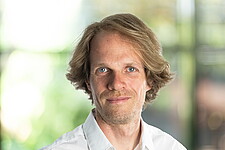

Dr Lembe Magwaza is an internationally recognised scientist and leader at the forefront of postharvest science, sustainable food systems, and climate-resilient agriculture. His work sits at the intersection of plant physiology, agroecology, engineering, digital agriculture, and data science, addressing global challenges of food loss, sustainability, and nutrition security. With over two decades of scholarship, Lembe has pioneered sensor-based, non-destructive technologies, including spectroscopy, imaging, machine vision, chemometrics, and AI, to model crop growth, resource-use efficiency, and postharvest quality. His innovations, spanning sustainable fertilisation strategies, seed quality enhancement, edible coatings for postharvest quality preservation, and high-throughput phenotyping, have reduced food waste, improved value-chain efficiency, and informed climate-smart production systems across Africa, Europe, and the UK. A core focus of his research is on indigenous and underutilised crops. He has led transformative work on leafy vegetables and pulses such as pigeon pea, cowpea, and Bambara groundnut, generating foundational knowledge for drought resilience, nutritional security, and inclusive value-chain development through participatory and field-based approaches. Lembe is a Senior Lecturer at Cranfield University, UK, and a proposed UKUDLA-linked Tier 1 NRF-funded Research Chair and Professor of Sustainable and Resilient Food Systems (SureFoods) at the University of Mpumalanga. He is an NRF C2-rated researcher with over 200 publications and more than £25 million in competitive funding. His global impact is further evidenced by his leadership of transformative programs, including the Clean Cooling Network across Africa and Asia, and his role as an expert consultant for the International Atomic Energy Agency (IAEA). His career reflects a forward-looking vision of science as a driver of innovation, equity, and sustainable food futures.
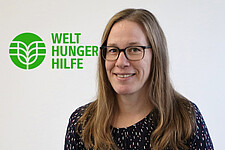
Simone Welte is a Nutritionist and Certified Business Economist with over 15 years of experience in global nutrition policy, food systems, and international agri-food markets. She serves as Global Nutrition Advisor at Welthungerhilfe within the Sector Strategy, Knowledge and Learning Unit, where she provides strategic leadership on nutrition programming, accountability, and evidence-based approaches to address all forms of malnutrition, with a particular focus on undernutrition and hidden hunger. Prior to joining Welthungerhilfe, she worked at the Bundesanstalt für Landwirtschaft und Ernährung (BLE), a subordinate authority of the German Federal Ministry of Food and Agriculture, where she gained in-depth expertise in agricultural markets, food standards, and regulatory frameworks. She previously worked in the private sector in the international trade of organic products, managing imports of fresh and dry organic produce into the European Union and working extensively with EU marketing standards, organic regulations, and international certification systems.
Her policy engagement includes contributions to national and international nutrition processes, collaboration with WHO and FAO, and work on accountability, data transparency, and cost analyses related to Zero Hunger. She co-authored the Opportunity Crops market study, contributing expertise on nutrition-sensitive market development, affordability, and equity-driven investment strategies in low- and middle-income countries. Simone Welte is an alumna of the Seminar for Rural Development (SLE), Berlin (2005).

Dr Ethel E Phiri is a plant scientist and agroecology scholar based at Stellenbosch University. Her work focuses on sustainable agricultural systems, climate resilience, and the role of indigenous and underutilised crops in transforming food systems. Her research integrates plant production, crop protection, and systems-based approaches to agriculture, with particular attention to strengthening smallholder farming systems and enhancing climate adaptability. She has authored and co-authored multiple peer-reviewed publications and has supervised numerous MSc and PhD students working at the intersection of sustainable crop production, resilience, and food security. A strong advocate for bridging science and society, Dr Phiri actively engages in science communication and interdisciplinary collaboration. She serves as the Editor-in-Chief of the Journal of Underutilised Crops Research, where she promotes scholarship on neglected and indigenous crop species as pathways to diversified, equitable, and climate-resilient food systems.
Prof. Dr. Karl Schmid holds the Chair of Crop Biodiversity and Breeding Informatics at the University of Hohenheim, Stuttgart. His research focuses on crop biodiversity, population genetics, evolutionary genetics, and plant breeding informatics. After studying biology and completing his doctorate at the University of Munich, he worked as a postdoctoral fellow at Cornell University and later led research groups at the Max Planck Institute for Chemical Ecology in Jena and the Leibniz Institute of Plant Genetics and Crop Research in Gatersleben. In addition to his academic work, he has served in a range of leadership and advisory roles, including as Speaker of the DFG Priority Program “Rapid Evolutionary Adaptation – Potential and Constraints” and as a member of the Central Commission for Biological Safety.

Prof. Dr. Christine Wieck is the Chair of the Agriculture and Food Policy Department at the University of Hohenheim. She is a researcher focused on developing and analysing policy options for achieving sustainable, resilient agricultural and food systems in an increasingly globalised market environment. Her research, teaching and outreach centers on the quantitative and qualitative analysis of the sustainable transformation of food systems in open and global markets. Since 2020, she is a member of the scientific advisory board of the German Federal Ministry of Food and Agriculture. She is the principal investigator of the project INCrease (together with Prof. Ndiko Ludidi) and of the project UKUDLA (together with Prof. Thomas Dimpfl, Prof. Julian May and Prof. Clement Nyrienda)